Huawei is now proudly boasting the fact that it's already managed to ship over 2.6 million units of its P9 and P9 Plus smartphones, which were both unveiled at its special event on April 6.
The P9 and P9 Plus have achieved that number of shipments within just six weeks of going on sale. What's more, outside of China the sales volumes for the P9 are 130% higher than they were for the P8 last year in the same amount of time. In France, the P9 sales numbers are 1,000% bigger than they were for the P8, while in Poland and Finland that difference is 'just' 400%. The UK isn't doing bad either, with 300% more units shipped compared to last year's flagship.
In terms of actual numbers of units sold, not compared to any previous device, the P9 and P9 Plus are doing best in China, France, Finland, and the UK, according to Huawei. The P9 and P9 Plus have helped the Chinese company remain the third biggest smartphone maker in the world.
إظهار الرسائل ذات التسميات smartphones. إظهار كافة الرسائل
إظهار الرسائل ذات التسميات smartphones. إظهار كافة الرسائل
الأربعاء، 15 يونيو 2016
AT&T Wi-Fi calling now on Android, but only the LG G4 for now
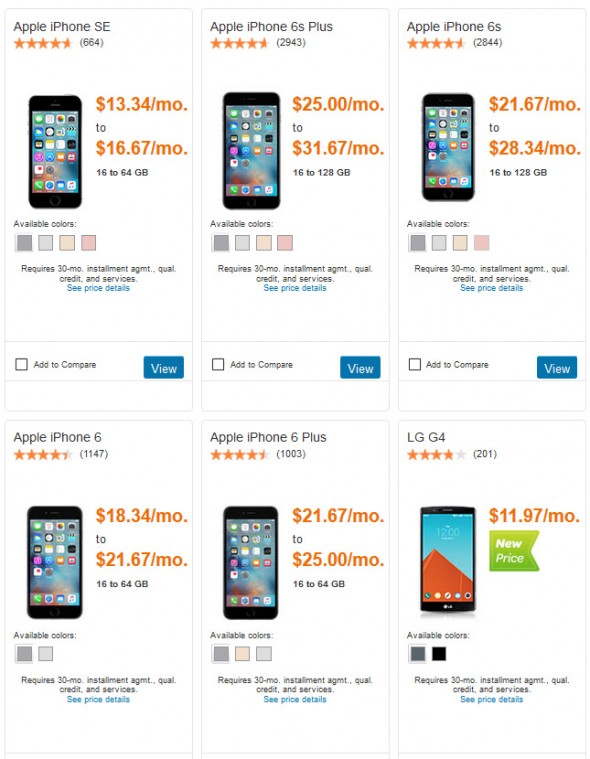
AT&T has only had Wi-Fi calling on the iOS lineup, the iPhone 6, 6 Plus, 6S, 6S Plus, and SE are all the iOS devices that support AT&T's Wi-Fi calling. But Android users have been left in the dark without the option of hooking up to a Wi-Fi network to shoot out some text messages or place calls when out in a dead zone.
AT&T’s Wi-Fi calling works much like any other carrier’s. All of the device’s calling and sms traffic can be handled entirely over a Wi-Fi connection without relying on any additional apps.
All phones that support AT&T Wi-Fi calling as of June 15 2016
The only Android phone that is able to rely on solely a Wi-Fi connection is the LG G4 for now. But AT&T promises that the feature will reach more Android devices over the “coming weeks”.
Currently, to qualify for AT&T’s Wi-Fi calling feature, you must have a post-paid account within the US, Puerto Rico, and some international areas. AT&T’s list of phones currently supported with Wi-Fi calling can be found here.
Deal: unlocked, refurbished Motorola Nexus 6 for just $180 on eBay

The Nexus 6 was a well-built Nexus device made for Google by Motorola. This was the first time a Nexus phone went beyond the 5 inch mark, all the way to 6 inches.
A manufacturer refurbished Motorola Nexus 6 can be purchased for just $180 in the midnight black color and 32GB of internal storage. These are unlocked units so you can insert any nano SIM card and receive a signal.
This is NOT the North American variant which is compatible with CDMA networks Verizon and Sprint. This variant will ONLY work on GSM networks.
Google is still supporting the Nexus 6 and it will be receiving the Android N update and is currently eligible for installing the Android N developer previews.
The Motorola Nexus 6 has a huge QHD AMOLED 6.0 inch screen, 3GB of RAM paired with a Snapdragon 805 CPU, 13MP camera with OIS, 3220mAh battery compatible with Quick Charge 2.0, and was the first smartphone outfitted with Android 5.0 Lollipop out of the box.
الاثنين، 6 يونيو 2016
LG G5 lands in Taiwan as G5 Speed

LG has launched its G5 flagship smartphone in Taiwan. Carrying a model number of LG-H858, the device costs TWD 23,900 in the country, which translates into around $740 at current exchange rates.
While it's essentially the same version that's available in most other regions around the world (except that it supports 3 carrier aggregation), the phone doesn't carry the standard 'G5' moniker in Taiwan - it has been launched as the 'G5 Speed' instead. The handset is currently exclusive to local carrier Chunghwa Telecom.
This comes just days after the phone landed in India, where it carries an official price tag of INR 52,990 (which is about $790).
Marshmallow-based CyanogenMod 13 nightlies now available for several new devices including OP2

Alternative Android OS developer Cyanogen has released the Marshmallow-based CyanogenMod 13 nightly builds for a number of new devices. The list includes the OnePlus 2,Yu Yureka, Moto X Pure, Oppo R5 and R5s, and the Xperia Tablet Z.
The nightlies bring Android version 6.0 to these devices. Keep in mind that the builds may contain bugs as they usually aren't stable. Plus, installing them may not only result in a bricked device, but also void your handset's warranty.
In case you missed, the OnePlus 2 has already started receiving the official Marshmallow update.
Marshmallow starts hitting Galaxy S5 (Exynos variant) in India

Less than a couple of months after rolling it out to the Snapdragon variant in the country, Samsung has started pushing out the Marshmallow update to the Exynos variant of the Galaxy S5 (SM-G900H) in India.
Bringing along Android 6.0.1, the update is rolling out over the air (OTA), as well as available through the South Korean company's Smart Switch software for PCs. You can also manually check for it by heading to the Settings menu on your device.
Xperia Ear landing in Canada this summer, Sony confirms

Remember the Xperia Ear that Sony unveiled back in February at this year's Mobile World Congress (MWC)? Well, the company has now revealed some information on the accessory's Canadian launch.
According to Sony Mobile North America’s Senior Director of Marketing Don Mesa, the device will land in Canada this summer - "late summer" to be precise. So those in the country waiting for the device can expect it to be launched withing the next 2-3 months.
To refresh, the Xperia Ear - as the name suggests - is essentially an earpiece. Its selling point, however, is that it also doubles as your own personal assistant. You can learn more about the device in our hands-on story.
Microsoft Lumia 550 currently going for $99

The Windows 10-powered Microsoft Lumia 550 has received an official price cut in the US, where it's now available for under $100 ($99 to be precise), down from its usual price of $139.
That's a price cut of $40, which translates into a discount of nearly 30%. What's worth mentioning here is that the said discount is on the black color variant of the device - in fact, the white model currently isn't even listed on the online Microsoft Store.
Interested in availing the deal? Head to the Source link below. The promo runs through June 11.
Samsung Galaxy J3 Pro goes official with quad-core CPU, 5-inch display

Samsung has announced a new phone dubbed Samsung Galaxy J3 Pro. Listed on the South Korean company's China website, the device is powered by a quad-core 1.2GHz processor and sports a 5-inch HD display. It has 2GB RAM and 16GB expandable internal memory.

In terms of camera, the handset features an 8MP rear unit and a 5MP front shooter. Measuring 142.2 x 71.3 x 8mm and weighing in at 139g, the phone runs Android 5.1 Lollipop, packs in a 2,600mAh battery, and offers support for dual-SIM and 4G LTE.
As for price, the Galaxy J3 Pro carries a tag of RMB 999 (about $150), while color options include gold and gray. Local carrier China Telecom will be selling it, although there's no information on the availability front yet.
Moto Z backs to add X-like class with leather, wood and more

Lenovo is doing a major rebrand of Motorola - from dropping the "Motorola" name itself (in favor of "Lenovo Moto") to dropping the Moto X as a flagship. The new Moto Z will feature a modular design, which among other things will be used to easily customize the back.
Several backs were photographed - from "ballistic nylon" (like the Moto X Force) through leather and a couple of wood options.
Motorola's modular Project Ara stayed at Google when Lenovo bought the company, but it seems the new owner is not impartial to modular designs.
This one is distinct from both Ara's and LG's solution, the modules for the Moto Z cover the whole back and communicate over pogo pins (visible in this leak).

Some modules will just function like snap-on covers, others will add battery, speakers (by JBL) or camera (by Hasselblad). The Tech World conference starts in 3 days and we expect the Moto Z will make its first official appearance there.
Gionee S6 Pro detailed by TENAA: 5.5" 1080p AMOLED, S652 chipset

In November last year, Gionee unveiled the S6 and soon there will be a pro version. TheGionee S6 Pro is coming on June 13 in China and it really cranks up the specs.
The metal unibody will now be filled with the popular Snapdragon 652 chipset with 4GB of RAM. The 5.5" display will have 1080p resolution, up from 720p. The Android version was bumped to 6.0 Marshmallow too and a 64GB storage option has been added (there's a microSD slot if you need more).


Gionee S6 Pro (photos by TENAA)
All this made the Gionee S6 Pro a bit thicker - from 6.9mm of the regular S6 to 7.6mm. It weighs the same, though, and the battery capacity is basically unchanged - 3,130mAh. A USB Type-C port will be used for charging and wired data connectivity.
The phone brings a fingerprint reader, opting for the Home key position instead of the back. There is also a 13MP main camera (1080p video) and an 8MP selfie camera.

Invite for the June 13 event
Again, the unveiling is a week from now (next Monday). The press invite talks about machining the metal with diamond-tipped tools, but we're not 100% sure what the 7 means.
الأحد، 5 يونيو 2016
ZOPO Speed 8 review

Well, the ZOPO Speed 8 finally made it to the office. Not ringing a bell? Well, we can't really blame you, but if you have heard of the of the first officially launched 10-core CPU device, this is the one.
Naturally, the first thing we did was put all 10 of them through our benchmark routine and while the results were impressive, the numbers weren't really as spectacular as we had expected even in multi-core scenarios.
The appearance of the Meizu Pro 6 also didn't help the general excitement levels about the Speed 8 and its Helio X20, since we saw the overclocked MT6797T Helio X25 inside the Meizu that finally managed to close in on the synthetic performance of rival chip offers like the Qualcomm Snapdragon 820 or the Samsung Exynos 8890.
This, however, might provide us with the perfect opportunity to look a little bit more objectively at the ZOPO Speed 8 and evaluate its other qualities as a $300 mid-ranger. Let's start with the exterior.


ZOPO Speed 8
The ZOPO Speed 8 measures exactly 152.5x76.24x9.8mm and weighs in at 150 grams, which is fair enough for a 5.5-inch device. It is offered in classic black or white (well, more like silver actually) and its looks pretty good in terms of design with its rounded edges and metal-like finish on the frame. However metal-like is is about as far as the phone gets in terms of premium materials.
What ZOPO describes as a "Brushed metal look" is really plastic all around. We can't really be sure what the "nano injection molding and spray coating technology is", but the materials and build quality on the Speed 8 are not quite perfect. It's not too bad for mid-ranger, but it doesn't exceed any expectations either. Main issues we saw were the back that scratches easily and there are the visible mold points on all four corners of the frame.
Even the factory pre-applied screen protector seems to have a badly cut excess piece near one end, so corners were definitely cut. Other than that, the device does arguably look elegant with a clean front with no controls and nicely tucked-away speaker and microphone grills and an equally nice back with a slight sloping effect.

And while we are on the topic of hardware, some aspects of the 5.5-inc display are worth a mention. The FullHD resolution and IPS technology make for a clear and sharp picture. Brightness is around 460 nits. As for sunlight legibility, even at maximum brightness, glares and reflections are a bit too much for our taste. Our test rated it at 2.264.
The display may not be perfect, but there are still a lot of other details to like about the Speed 8. For one, you have a USB Type-C port, which can constitute as futureproofing. There is also a front-facing flash for low-light selfies and lets not forget the rear-mounted fingerprint reader.
It deserves a shout-out as it is not only always-on, but also very accurate. Speed-wise, we have seen better, but with an unlock delay of about a second, it is definitely no slowpoke.

The battery performance was quite disappointing. With a capacity of 3600 mAh, one would expect decent endurance but, the Zopo clocked in only 41 hours of total endurance rating in our tests. Both web browsing and video playback took a huge toll on the battery, hinting at some major software imperfections.
On a positive note, there is Mediatek's own Pump Express Plus fast charging solution added to the mix for a quicker top-off. And if Zopo addresses the efficiency with a firmware update things might even look pretty decent. For now though you have to be ready for daily charging.

As for other honorable mentions in the hardware category, there is the Dual-SIM support, dual, although not dual-tone rear flash and the combination of both NFC and Hot Knot technology for quick file transfer and digital payments, among other things.
Performance on the Zopo Speed 8 is sort of a mixed bag. Just a quick reminder, the Mediatek Helio X20 (or MT6797, for the more technically inclined) features a deca-core CPU with a couple of Cortex-A72 cores clocked at up to 2.3GHz, four Cortex-A53's at 2.0GHz and another four Cortex-A53's, which can can only go as high as 1.4GHz. On board the Speed 8 there are 4GB of RAM, the chipset's maximum supported amount.
We definitely acknowledge the fact that you don't see a deca-core device every day and the multi-core results we achieved during our tests are undeniably impressive. Still, there is the matter of the Meizu Pro 6 and the Helio X25 that kind of steals the spotlight, plus, synthetic multi-core scores are far from an adequate indication of real world performance. Still, here is a quick GeekBench 3 breakdown and you can find the rest of the test, which sadly didn't go quite so well in the dedicated article.
GeekBench 3 (single-core)
Higher is better
GeekBench 3 (multi-core)
Higher is better
On the software side of things, ZOPO opted for a near stock Android Marshmallow experience for the Speed 8. Out of the box, you get the standard Google Launcher and only a handful of pre-installed apps - the Google suite itself and a few IM's (Facebook, Twitter and Skype). This is definitely a plus to any purists out there, however, despite the snappy CPU and the stripped-down OS, the ZOPO Speed 8 feels kind of sluggish. Perhaps it is the animation speed or some other software issues, but, overall, scrolling feels way too laid-back. It could just be us, but the overall feel seems a bit unworthy of the "Speed" moniker.

Last, but not least, lets look at the camera experience the Speed 8 has to offer. It is equipped with a 21.0MP Sony IMX230 main camera with an aperture of f/2.2 and a sensor size of 1/2.45". It is far from great by today's standards, but definitely gets the job done. Autofocus is a hit and miss and there's notable edge softness, while colors tend to stray towards the red spectrum from time to time.


Zopo Speed 8 camera samples
HDR seems to overexpose shots and go overboard with local contrast more than anything else, resulting in some pretty flat looking stills.
Low-light performance also needs some work, but again, it's not bad by any stretch. Noise seems to be an issues regardless of lighting conditions and things get pretty bad at night.


Zopo Speed 8 HDR samples
The 8.0MP front-facing camera is also nothing special, but definitely more than adequate to meet most selfie needs. The front-facing flash is particularly handy in low light.


Zopo Speed 8 front camera samples
On the video side of things, there are quite a few performance issues. While quality seems to be good overall, the videos themselves end up a bit choppy, as if the Speed 8 doesn't have the power to capture them properly. Interestingly enough, this happens both at a resolution of 1080p and 2160p, meaning that it is most-likely a software glitch and thus hopefully patchable. The videos also get saved in the antiquated 3gp format, which was never meant to go as high as 4K. In any case, just because it is possible, doesn't really make it a good idea.
And speaking of choppy video, the aforementioned problem seems to also be present in the viewfinder. The preview stream experiences a little delay and just a pinch of choppiness itself, plus, finer detailed patters seem to throw it into a flicker frenzy - not ideal, to say the least, but ZOPO seems to be working towards it as the latest software update did address most of the laggy behavior.
Out of the box, the ZOPO Speed 8 uses what looks like some older version of the Google camera app, with some custom modifications baked in.
Inside we find a predictable set of features, including HDR, Panorama, Night Mode, Sport Mode, Smile Detection. EIS can be toggles on and off via the settings and there are some white balance and exposure compensation options to play around with.
Other more interesting custom features within the app include an anti-flicker setting, which can be turned off, set to 50Hz, 60Hz or left on auto. Also, there is a preview size option, that, despite what its name suggests, not only affects the viewfinder but actually toggle between 16:9 and 4:3 mode. If you opt for the former, your camera resolution options will only cap out at 16MP.

Last, but not least, the Auto scene detection mode works really well and can not only switch between modes, but also toggle HDR and EIS based on conditions. However, it is also worth mentioning, that like many other mysteriously co-dependent options in the ZOPO's camera app, enabling auto seems to affect practically every aspect of the camera. Once in auto, you can't even switch to the selfie shooter or force HDR yourself. It is kind of restrictive and perhaps takes automation a but too far.
All things considered, while ZOPO deserves some credit for producing a good hardware package at an attractive price point, rushing to capitalize on the deca-core buzz has caused a few rough edges.
The phone feels incomplete in in some ways and there is still a lot of room for software improvement, which hopefully, ZOPO will take up. If all the bugs get ironed out you would still end up with a very solid $300 device. But today's competitive mobile market requires that the company acts quickly or customers will move on in search of pastures greener.


 المشاركات

